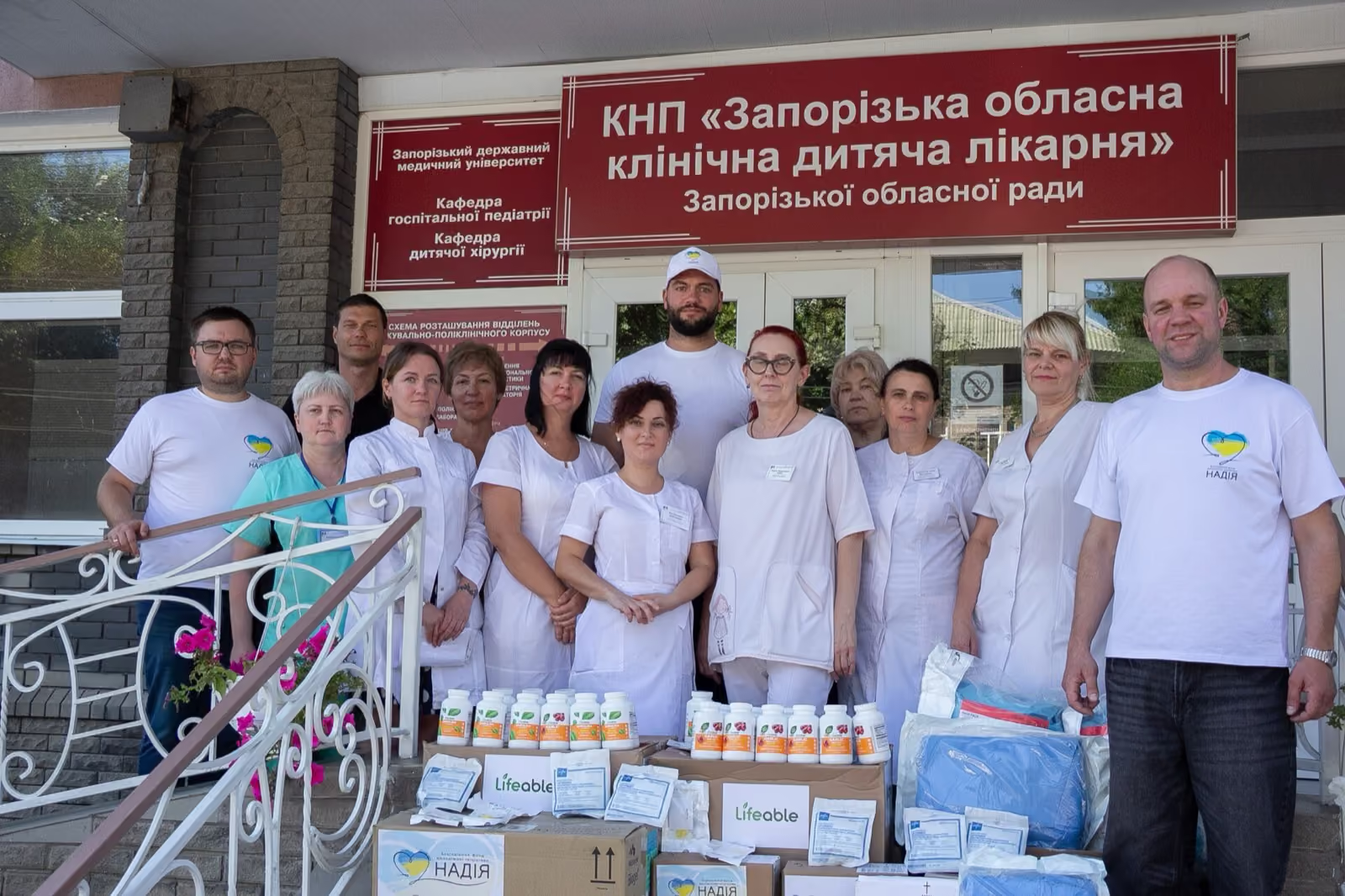
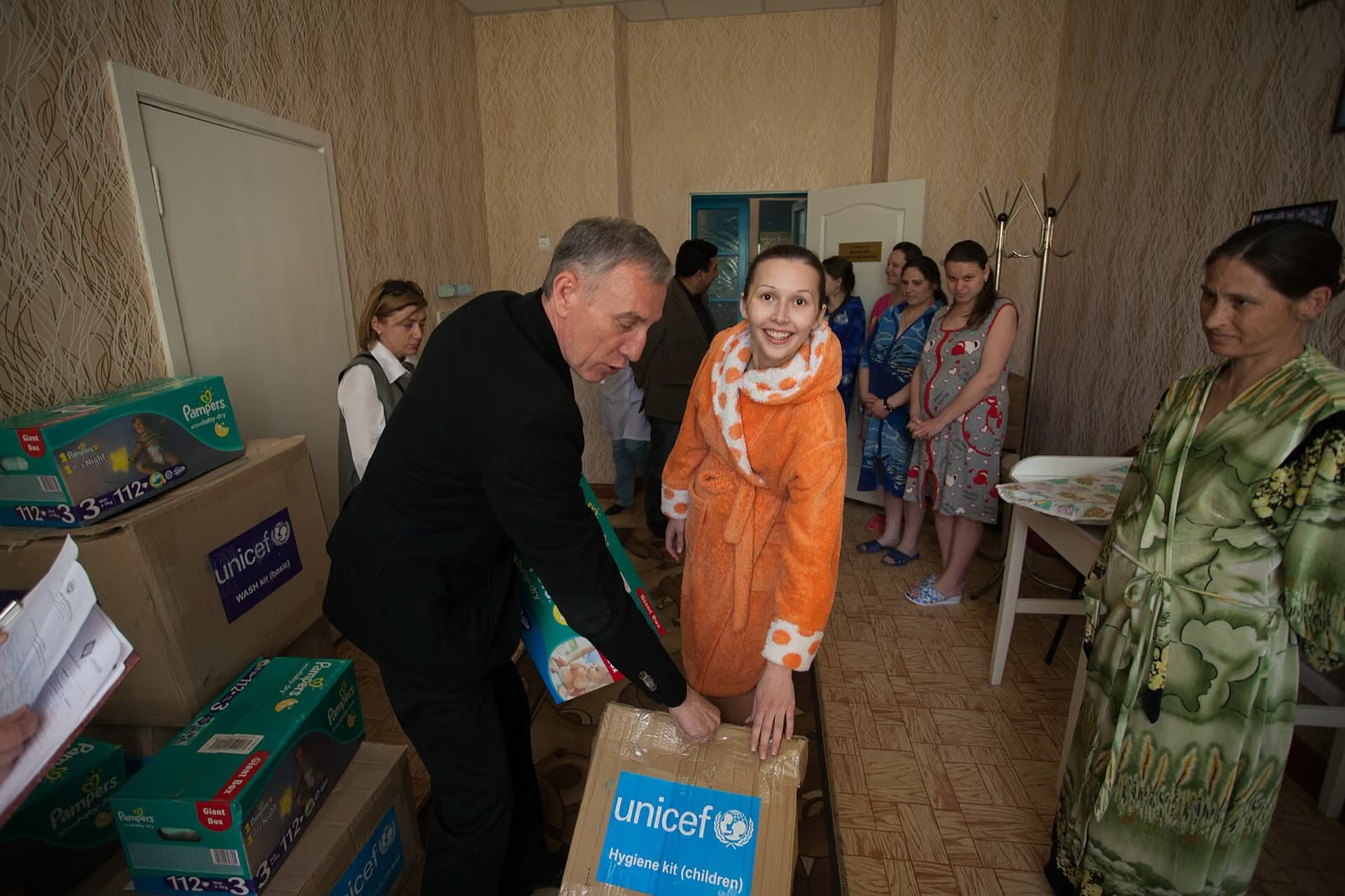
Since February 2022 we have supplied maternity hospitals with the equipment and drugs to keep mothers and newborns safe.
Photo: Revival Foundation / Wikimedia Commons, CC BY-SA 4.0
Overview
MCAI in Ukraine: Supporting healthcare and protecting lives during war
Since the war in Ukraine, MCAI has been working to support healthcare services and protect the health and well-being of women, babies, children and others affected by the conflict. Our work has included providing essential equipment and medical supplies to maternity hospitals, introducing an approach that empowers mothers to monitor their babies during labour, and supplying emergency medical equipment to help treat injured soldiers and prevent hypothermia. We have also undertaken research into the impact of the overlapping COVID-19 pandemic and war on maternal and newborn health.
Looking ahead, one of our key priorities is Sunrise for Children, an innovative proposed project in the Odesa region to identify mental health, well-being and safety concerns among children affected by prolonged conflict. We are seeking funding to develop this important initiative and help ensure that vulnerable children receive early identification, support and appropriate care.
Programme 1 of 4
Improving perinatal care and empowering mothers to monitor their babies during labour
MCAI has supported 61 maternity hospitals in Ukraine with essential medical equipment, medicines and supplies to help maintain high standards of care for pregnant women and their babies during the war.
Drawing on our experience in Liberia, we introduced an approach to fetal heart rate (FHR) monitoring that enables mothers to take an active role in monitoring their unborn babies during labour. Mothers in Ukraine correctly identified approximately 87% of changes in fetal heart rate, demonstrating the potential of this approach to support maternity staff and identify possible complications.
We also donated portable, battery-operated ultrasound scanners, allowing essential examinations to be carried out within maternity units rather than transferring women to separate ultrasound rooms. These have been particularly valuable during armed conflict and electricity shortages, helping identify complications including placenta praevia, breech presentation and difficulties during the birth of twins.
Research into the impact of COVID-19 and war on maternal and perinatal health, 2019–2024
The Lancet Regional Health – Europe (2026), 68:101774
MCAI undertook a population-based ecological study, using publicly available Ministry of Health data, to investigate the potential effects of the overlapping COVID-19 pandemic and war on maternal and perinatal health in Ukraine between 2019 and 2024.
The findings suggest that successive and overlapping crises can place considerable strain on maternal and newborn healthcare, with increases in illness and complications not always fully reflected in mortality statistics.
The research highlights the importance of strengthening healthcare systems, maintaining effective referral pathways and ensuring continued access to antenatal care, emergency obstetric services and newborn support during prolonged crises.
Sunrise for Children: Early screening of mental health, well-being and safety
The war in Ukraine has placed an enormous and prolonged emotional and psychological burden on children and adolescents. Many have experienced fear, bereavement, displacement, separation from family, loss of homes and schools, and the ongoing threat of air raids and shelling.
Children’s distress is not always expressed through obvious psychological symptoms; it can also appear as physical complaints, including headaches, abdominal pain, nausea, dizziness, fatigue, sleep disturbance and difficulties with concentration. The death, disappearance or forced separation from much-loved companion animals can also be a significant traumatic experience.
Sunrise for Children is a proposed pilot project in the Odesa region, aiming to improve the early identification of poor mental health, well-being and safety concerns among children and adolescents affected by the war and access to mental health professionals.
The project will seek to incorporate early screening into routine paediatric healthcare and wider community services, including schools and social care, recognising that children experiencing psychological distress may not necessarily be referred to specialist mental health services.
Anticipated outcomes:
Earlier identification of psycho-emotional and psychosocial difficulties.
Improved access to timely professional care and appropriate support.
Better recognition of physical symptoms associated with psychological distress.
A sustainable model for integrating screening into community and child-healthcare systems.
The project will also help document the effects of prolonged armed conflict on children, supporting MCAI’s wider advocacy work on the protection of children in armed conflict and the limitations of existing international mechanisms to end conflicts.
We are currently seeking funding to establish Sunrise for Children. With the right support, this project could make a meaningful difference to children growing up during war, helping identify those who are struggling and ensuring they receive the support and care they need. It also has the potential to provide a model that could be adapted for other conflict-affected communities.