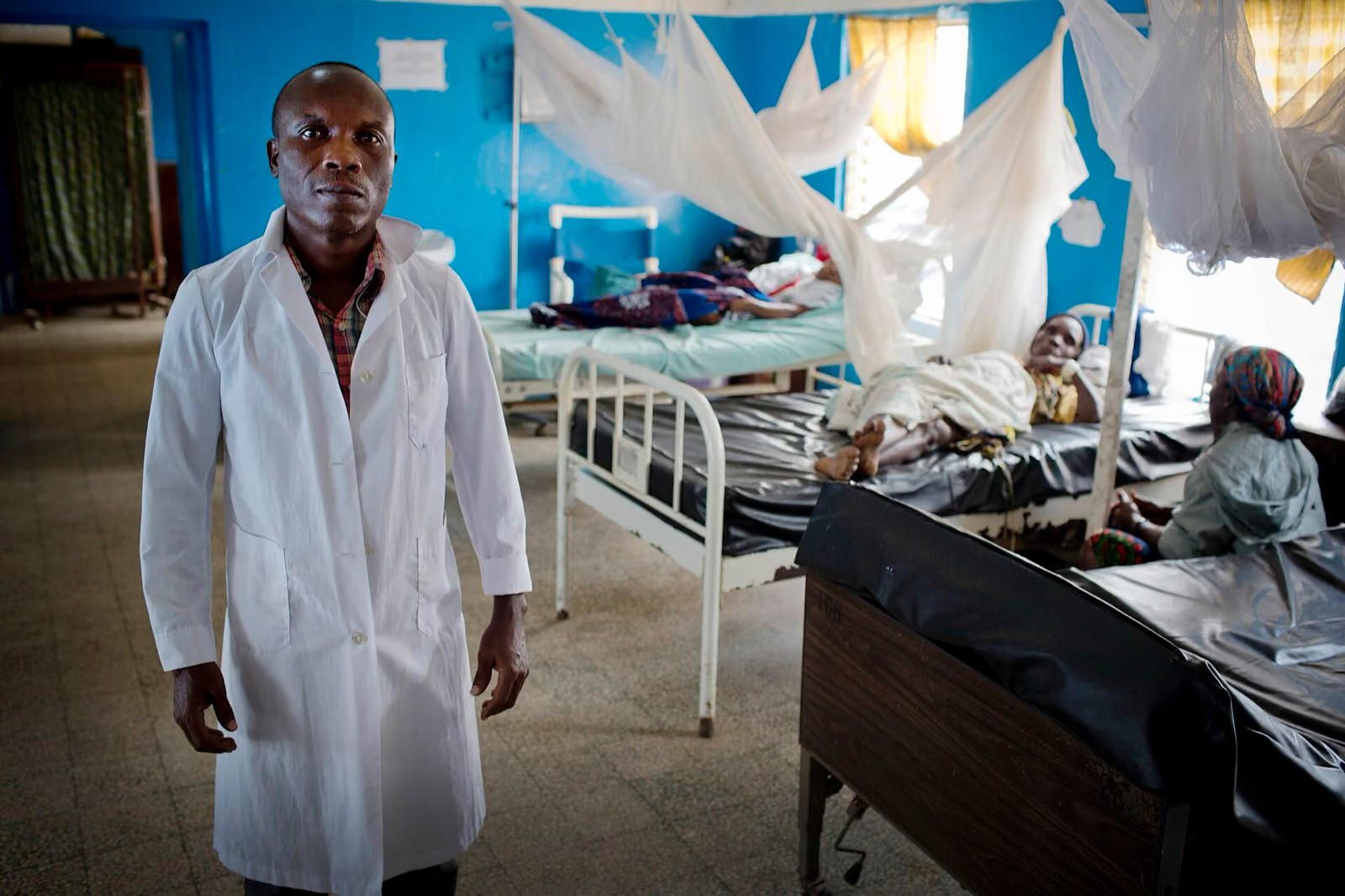
Since 2012 we have trained midwives and nurses to manage life-threatening emergencies in Liberia’s hospitals.
Photo: President's Malaria Initiative / Wikimedia Commons, public domain
Overview
MCAI in Liberia: Strengthening healthcare for mothers, newborns and children since 2012
MCAI has been working in partnership with Liberia’s Ministry of Health since 2012 to improve emergency healthcare for pregnant women, newborn babies and children. Through training local midwives and nurses in advanced obstetric, neonatal and paediatric care, introducing innovative approaches to fetal heart rate monitoring during labour, providing pain relief for mothers and delivering obstetric outreach to remote communities, we have helped strengthen hospital services and improve access to life-saving care.
Today, our priorities are to keep the FHR monitoring scheme running, continue obstetric outreach to identify high-risk pregnancies and help women access safer deliveries, and maintain the provision of intravenous paracetamol to relieve pain during labour.
Programme 1 of 4
Reducing mortality through a national task-sharing programme
A shortage of health workers, particularly doctors, contributes to high maternal, newborn and child mortality in countries with limited healthcare resources. To help address this, MCAI established a task-sharing partnership with Liberia’s Ministry of Health, the World Health Organization, UNFPA and UNICEF in 2012.
Over 12 years, our programme has trained local midwives and nurses to provide advanced hospital care for pregnant women, newborn babies and children. Rural county health teams selected 60 health workers for specialist training, including midwives, nurses and physician assistants.
Through a combination of apprenticeship-based and distance learning, supported by Liberian and international medical specialists, the programme achieved significant results:
57 health workers successfully qualified in their final examinations.
27 trained obstetric clinicians, 15 neonatal clinicians and 11 paediatric clinicians are providing specialist care.
53 qualified clinicians are working across 18 hospitals and four Comprehensive Emergency Obstetric and Newborn Care (CEmONC) facilities.
At the paediatric training hospital, child mortality fell from 9.5% before the international trainer arrived to 4.1% in the final year of training.
These clinicians now provide essential emergency services, including Caesarean sections and other emergency obstetric procedures, resuscitation and care for sick and premature newborn babies, and treatment for serious childhood illnesses.
This programme has demonstrated that, with appropriate training and support, midwives and nurses can provide safe and effective hospital care for pregnant women, newborn babies and children. It offers a practical and sustainable way to address shortages of doctors in low-resource and conflict-affected countries.
The programme’s experience and teaching materials have also been published, including extensive supplementary guidance to help other countries introduce similar training programmes.
Empowering mothers to monitor their unborn babies during labour
MCAI has introduced an innovative approach to fetal heart rate (FHR) monitoring that enables mothers to take an active role in monitoring their unborn babies during labour.
In understaffed hospitals and maternity units, regular monitoring of a baby’s heart rate can be difficult. Involving mothers in this process helps overcome staff shortages and enables potential problems to be recognised earlier, encouraging timely action to protect both mothers and babies. Another major benefit of the programme is that mothers feel valued and empowered by being able to monitor their own baby’s heart rate during labour.
Our work in Liberia found lower rates of intrapartum stillbirth, newborn deaths and birth asphyxia than those reported in an earlier Liberian study in 2014, and lower than rates in other low-income countries. Including mothers in fetal heart rate monitoring is likely to have contributed to these improvements.
Keeping this life-saving scheme running is a key priority for MCAI. Continued support will help ensure that mothers can remain involved in monitoring their babies during labour, particularly in settings where maternity staff and resources are limited.
Intravenous paracetamol for controlling pain in labour
Following feedback from women participating in our fetal heart rate monitoring programme, MCAI introduced intravenous paracetamol to help reduce labour pain.
Managing labour pain safely can be challenging in settings with limited medical resources; any treatment must be effective, safe to mothers and their unborn babies and as low cost as possible. Intravenous paracetamol meets all of these criteria and so with the permission of the Ministry of Health and consent from each mother, MCAI introduced it in two rural Liberian hospitals. The treatment has provided much relief to birthing mothers and has also helped them to participate more comfortably in fetal heart rate monitoring during labour.
MCAI plans to continue delivering this scheme, helping more women access effective pain relief.
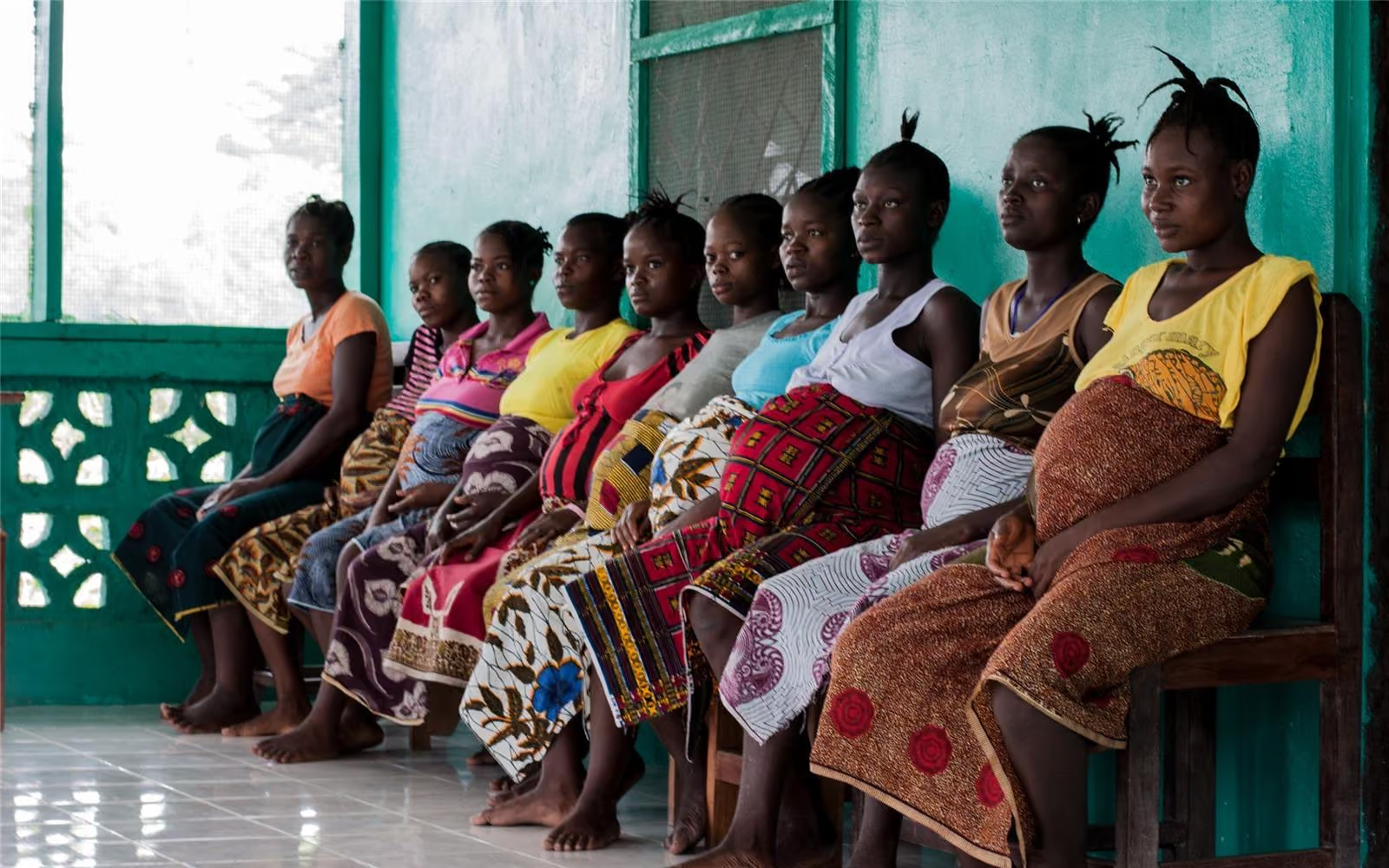
Women living in remote parts of Liberia face significant challenges in accessing safe maternity care. Poverty, long distances, poor roads, limited transport and weak referral systems can all delay access to emergency obstetric and newborn services. These challenges are particularly acute during the rainy season.
Since 2019, MCAI-supported obstetric clinicians have been conducting monthly outreach antenatal clinics in remote areas of four counties: Grand Gedeh, River Cess, River Gee and Sinoe.
Using clinical assessments and portable ultrasound equipment, the outreach teams identify high-risk pregnancies and help women plan for safer deliveries, including arranging appropriate follow-up and access to hospital care where needed.
The outreach programme has demonstrated the importance of taking specialist antenatal care directly to remote communities, identifying pregnancies that might otherwise go unrecognised as high-risk. However, identifying high-risk pregnancies is only the first step; women can still face difficulties reaching hospital care because of transport costs, limited communication between rural clinics and hospitals, and gaps in referral and follow-up arrangements.
MCAI has therefore proposed a continuation and strengthening of the programme in partnership with UNICEF in Liberia. The aim is to improve the entire pathway from community to hospital, including:
Raising awareness and encouraging women to attend antenatal clinics.
Identifying high-risk pregnancies through clinical assessments and ultrasound.
Helping women prepare for childbirth and plan appropriate referrals.
Improving transport and communication between rural communities and hospitals.
Supporting access to hospital deliveries and emergency care.
Strengthening follow-up for mothers and newborn babies.
The programme will work through existing Ministry of Health and county healthcare structures, helping to strengthen and improve the services already in place.
Continuing obstetric outreach is a key priority for MCAI. By reaching women in some of Liberia’s most remote communities, we can help identify complications earlier, support safer delivery planning and improve access to the emergency care that mothers and babies need.